
Comme des Garçons: When Clothing Challenges the Mind
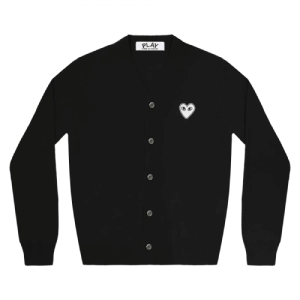
In a fashion world often driven by trends, https://commedesgarcons.jp/ desirability, and commercial appeal, Comme des Garçons exists as a radical counterforce. Founded by Rei Kawakubo in Tokyo in 1969, the brand has never been about pleasing the eye alone. Instead, Comme des Garçons asks questions—about beauty, identity, the body, and even the purpose of clothing itself. To wear Comme des Garçons is not simply to dress; it is to engage in a conversation that challenges the mind as much as the senses.
Fashion as a Concept, Not a Product
Rei Kawakubo approaches fashion as a form of intellectual exploration. Her collections are rarely designed to be easily understood or immediately admired. Garments arrive distorted, asymmetrical, unfinished, or deliberately awkward. Holes, lumps, exaggerated volumes, and unconventional proportions disrupt expectations of what clothing should look like or how it should function.
This refusal to conform forces the viewer—and the wearer—to think. Why must clothes flatter the body? Why is symmetry considered beautiful? Why should fashion always aim for elegance or sex appeal? Comme des Garçons transforms clothing into a philosophical object, one that demands interpretation rather than passive consumption.
Challenging the Idea of Beauty
One of the brand’s most powerful contributions to fashion is its challenge to conventional beauty. When Comme des Garçons debuted in Paris in the early 1980s, critics famously described the collections as “Hiroshima chic” due to their dark colors, distressed fabrics, and anti-glamour aesthetic. What many saw as ugly or confrontational was, in Kawakubo’s vision, a new form of beauty—one rooted in imperfection, vulnerability, and honesty.
By embracing the unfinished and the uncomfortable, Comme des Garçons redefines beauty as something emotional and intellectual rather than purely visual. It suggests that beauty can be unsettling, and that discomfort can be meaningful.
Deconstructing the Body
Comme des Garçons consistently questions the relationship between clothing and the human body. Instead of following natural curves, many designs reshape or even obscure the body entirely. The famous “lumps and bumps” collection from 1997 introduced padded protrusions that distorted the silhouette, challenging ideals of femininity, attractiveness, and physical normality.
In doing so, the brand liberates the body from fashion’s rigid expectations. The wearer is no longer required to conform to a standardized ideal; instead, the body becomes a canvas for experimentation. Clothing no longer serves the body—it interrogates it.
Between Art and Fashion
Comme des Garçons exists in the space between fashion and art, refusing to fully belong to either. Kawakubo herself has rejected the label of “artist,” yet her work is regularly exhibited in museums and studied in academic contexts. Each collection functions like a conceptual installation, often built around abstract ideas such as absence, fear, chaos, or duality.
Runway shows are not merely presentations of garments but immersive experiences that provoke emotion and reflection. In this way, Comme des Garçons challenges the mind by asking audiences to think beyond wearability and consider fashion as a language capable of expressing complex ideas.
The Intellectual Act of Dressing
To wear Comme des Garçons is an intentional act. It signals a willingness to question norms and embrace ambiguity. The clothing resists easy interpretation, inviting dialogue rather than admiration. It encourages individuality not through trend alignment but through personal thought.
In a culture increasingly dominated by fast fashion and visual sameness, Comme des Garçons stands as a reminder that clothing can still be radical. It can disturb, provoke, and inspire thought. Rei Kawakubo’s work proves that fashion does not have to comfort the mind—it can challenge it, expand it, https://itakhost.net/ and ultimately transform the way we see the world.

 English
 Arabic
 French
 Portuguese
 Deutsch
 Turkish
 Dutch
Dutch
 Italiano
 Russian
 Romaian
 Portuguese (Brazil)
 Greek
Greek