
The Unbuilt Worlds: Exploring Opportunities in the Terrestrial Photogrammetry Software Market
The field of terrestrial photogrammetry, while already a powerful technology, is on the verge of a new era of growth driven by emerging use cases and the convergence with other advanced technologies. The future is rich with new and transformative Terrestrial Photogrammetry Software Market Opportunities that will expand its reach and capabilities far beyond current applications. One of the most significant of these is the move from static 3D models to dynamic 4D monitoring. Traditional photogrammetry captures a single snapshot of an object in time. 4D photogrammetry involves capturing and processing image sequences over time to monitor changes and deformations. This creates a massive opportunity in fields like civil engineering and geotechnical monitoring. By installing fixed cameras aimed at a bridge, a dam, or a landslide-prone slope, engineers can use photogrammetry software to automatically track minute changes and movements over days, weeks, or years, providing an invaluable early warning system for potential structural failures. In construction, it can be used to create a time-lapse 3D model of a building's progress, allowing for a detailed, day-by-day comparison of the as-built reality versus the planned schedule.
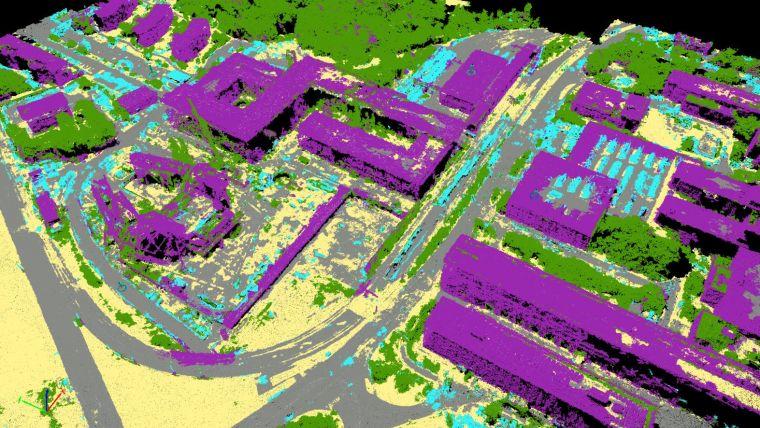
The deep integration of Artificial Intelligence (AI) and Machine Learning (ML) into the photogrammetry workflow represents another profound opportunity. This goes far beyond just using AI to improve the reconstruction algorithms. The real opportunity is in automatically interpreting and classifying the generated 3D data. Imagine a photogrammetry model of a building facade where an AI can automatically identify and classify every single component: every window, every door, every brick, and even identify and flag every crack or area of spalling. This would transform the 3D model from a simple geometric representation into a rich, semantically-aware digital asset. For infrastructure inspection, this would mean a system that can automatically generate a detailed damage report from a set of photos. In a manufacturing setting, it could be used for automated quality control, comparing a 3D scan of a finished part against its CAD model to automatically detect any manufacturing defects. This ability to add a layer of intelligent understanding on top of the 3D geometry will unlock a host of new, high-value industrial applications.
The insatiable demand for 3D content for the metaverse, virtual reality (VR), and augmented reality (AR) is a massive, long-term opportunity for the entire industry. As these immersive platforms grow, they will require a colossal library of realistic 3D assets to populate their virtual worlds. Photogrammetry is one of the most efficient and effective methods for creating these assets. The opportunity for software vendors is to create tools and workflows that are specifically optimized for this use case. This could include features for automatically simplifying high-polygon scan data into game-ready, low-polygon models, tools for automatically generating the different levels of detail (LODs) required for real-time rendering, and seamless, one-click export to popular game engines like Unreal Engine and Unity. The acquisition of RealityCapture by Epic Games is a clear signal of how critical photogrammetry is seen as a foundational content creation tool for the future of interactive 3D entertainment and social platforms.
Finally, there is a significant opportunity to democratize 3D capture on mobile devices. While smartphone cameras are already capable of capturing the necessary images, the processing is still typically done on a powerful desktop computer. The opportunity is to create a seamless, end-to-end mobile workflow that combines capture, cloud processing, and viewing all within a single, user-friendly app. A real estate agent could walk through a property, capture a series of photos with their phone, upload them to the cloud for processing, and receive a link to a shareable 3D virtual tour a short time later. This would make 3D scanning accessible to a massive new audience of non-technical users. The integration of on-device LiDAR scanners in high-end smartphones (like the iPhone Pro) presents a further opportunity for "hybrid capture" apps that can combine the geometric accuracy of LiDAR with the photorealistic texture from photogrammetry to create even better and more reliable results, truly putting the power of 3D scanning into everyone's hands.
Top Trending Reports:

 Arabic
 French
 Spanish
 Portuguese
 Deutsch
 Turkish
 Dutch
Dutch
 Italiano
 Russian
 Romaian
 Portuguese (Brazil)
 Greek
Greek